
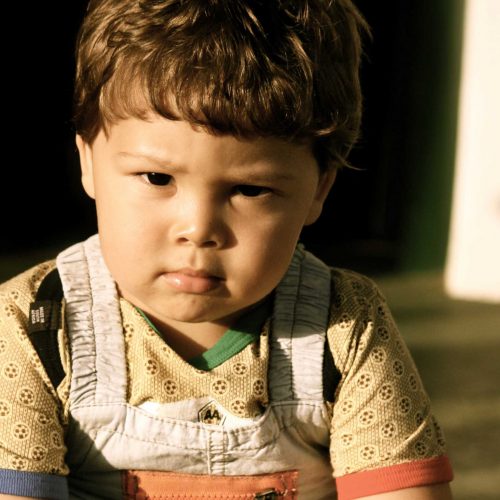
Write this word on your hand. It’s a magical way to connect with a child of any age, can ease tears and tantrums and even prevent them. It’s a simple but surprisingly challenging thing to do, particularly tough to remember in the heat the moment…
Acknowledge.
Before you tell your child that it’s time to leave the park, or remind him that the really cool truck he’s examining has to stay at the store, acknowledge his point of view. Acknowledge your child’s feelings and wishes, even if they seem ridiculous, irrational, self-centered or wrong. This is not the same as agreeing, and is definitely not indulgent or allowing an undesirable behavior.
Acknowledging isn’t condoning our child’s actions; it’s validating the feelings behind them. It’s a simple, profound way to reflect our child’s experience and inner self. It demonstrates our understanding and acceptance. It sends a powerful, affirming message… Every thought, desire, feeling — every expression of your mind, body and heart — is perfectly acceptable, appropriate and lovable.
Acknowledging is simple, but it isn’t easy. It’s counter-intuitive for most of us, even when we’ve done it thousands of times. Won’t acknowledging our child’s wishes make matters worse? Won’t saying “I know how much you want an ice cream cone like the one your friend has and it does look yummy, but we won’t be having dessert until later” make our toddler hold on to the idea longer, cry harder? Wouldn’t it be better to dismiss or downplay the child’s feelings, distract, redirect or say:”Oh, sweetie, not now”?
Our fears about an honest acknowledgement of the situation “making things worse” are almost always unfounded. Feeling heard and understood allows children to release the feelings, let go and move on. Here are more reasons that acknowledging our child’s truth is worth the conscious effort it takes…
1. Acknowledging can stop tears and tantrums in their tracks.
I have witnessed this many, many times. Whether a child is upset about an injury, a disagreement with another child or anger over a conflict with a parent, acknowledging to the child what happened or that he is hurt, frustrated or angry can miraculously ease the pain. Feeling understood is a powerful thing.
2.Acknowledging, instead of judging or “fixing”, fosters trust and encourages children to keep sharing their feelings.
Parents and caregivers have an enormous influence, and their responses have an impact on young children. If, for example, we try to calm children by assuring them that there’s no need to be upset or worried about something that’s troubling them, they may become less inclined to express their feelings. If our goal is our child’s emotional health and keeping the door of communication open – just acknowledging is the best policy. “Daddy left and you are sad.”
I was reminded of this recently when one of my teenage daughters shared her anger and heartbreak over a long time best friend’s lies and betrayal. How hard it was not tell her that this friend is flawed and that my daughter deserves so much better! How hard it was to just listen and acknowledge the hurt and disappointment. As painful as this experience was for me, I treasure it, because my daughter trusted me with her innermost feelings. I’ll do all in my power to encourage her to share with me again. (My daughter ended up resuming her relationship with her long adored friend, having noted her limitations, and I was so glad I held my tongue.)
3. Acknowledging informs, encourages language development and emotional intelligence.
Children gain clarity about their feelings and desires when we verbally reflect them. But don’t state the feeling unless you’re sure. It’s safer to use the words “upset” or “bothered” rather than jumping to “scared”, “angry”, etc. When in doubt, you might ask, “Did it make you mad when Joey wouldn’t let you use his blocks?” “Did the dog’s bark frighten you or just surprise you?”
An added benefit: talking to babies, toddlers, children of all ages about these “real things” happening to them is the most powerful, meaningful and natural way for them to learn language.
4. Acknowledging illuminates, helps us understand and empathize.
To state our child’s point of view, we have to first see it, so acknowledging helps to give us clarity. When we say, “You want me to keep playing this fun game with you, but I’m too tired”, we are encouraged to empathize with our child’s point-of-view (and he ours).
Acknowledging the situation and asking questions (especially when we don’t know the reason our child is upset) can help us to unravel the mystery. “You’re upset and look uncomfortable. You just ate, your diaper is dry. Maybe you need to burp? Okay, I’m going to pick you up.”
5. Acknowledging struggles might be all the encouragement your child needs to carry on.
This is another scenario in which a simple acknowledgement can work like magic. Rather than saying, “you can do it!”, which can create pressure and set the child up to believe he disappoints us, try saying, “You are working very hard, and you’re making progress. That is tough to do. It’s frustrating, isn’t it?”
6. Acknowledgements instead of praise help children stay inner-directed.
This is as simple as containing our impulse to cheer loudly or say “good job!”, and instead smiling and reflecting, “You pulled the plastic beads apart. That was really hard.”
“Let your child’s inner joy be self-motivating. You can smile and express your genuine feelings but should refrain from giving excessive compliments, clapping your hands, and making a big fuss. If you do this, your child starts seeking satisfaction from external sources. She can get hooked on praise, becoming a performer seeking applause instead of an explorer. Praise also disrupts and interrupts a child’s learning process. She stops what she’s doing and focuses on you, sometimes not returning to the activity.” –Magda Gerber, Your Self-Confident Baby
7. Acknowledging proves that we are paying attention, makes a child feel understood, accepted, deeply loved and supported.
Could there be any better reason to give it a try?
“People will forget what you said; People will forget what you did.
But people will never forget how you made them feel.” -Maya Angelou
“We all need someone who understands.” –Magda Gerber
I share more about respectful care and emotional health in
Elevating Child Care: A Guide to Respectful Parenting
(Photo by girlwiththecamera on Fickr)








Yes, yes, yes, yes, yes! I agree completely with all you say here.
I have seen a completely hysterical 3-year-old with suspected ASD stop a tantrum in its tracks simply because I acknowledged what had happened to her, guessed what she had wanted to happen instead (correctly- phew!) and asked her if she was angry or sad.
She stopped screaming and thrashing for long enough to shout “ANGRY!!” (not bad for a 3-yr-old with language delay) and was able to self-settle, with a little help from me, within 2 minutes and return to the activity peacefully. (And no, this wasn’t accepting bad behaviour; I had also told her I would not let her hit and kick me.)
This WORKS!
I’ve found that sometimes a child just knowing that someone has heard him is enough to defuse a situation. I’ve been trying to practice what Teacher Tom calls narrating – talking about what I see the child doing in an activity. “You are stacking the blocks. You are putting the square block on top….” This is a different type of acknowledgement but often opens the door for more conversation or at least a smile from the child.
Thanks for a great post!
This is the “sportscasting” Janet mentions in her books
Great article! I no longer have small children at home, but I have practiced this type of communication all thu their growing up years. Even as adults, I seem to be able to bring my children back to earth, smply by acknowledgeing their feelings, and acknowledging what they are going through. My oldest son, just the other day, said to me, “It makes me feel better just knowing that someone understands.” So, don’t hesitate to practice this on adults as well as the little ones. Great Article!
Thank you, Constance! I love hearing your “long view” regarding acknowledgements. Yes, this an effective way to connect with anyone of any age and especially powerful coming from a beloved parent.
Such helpful advice! Along the same lines as the Happiest Toddler on the Block. Sometimes I struggle with just saying, “I know, I know.” but this is very helpful specific suggestions. Thanks!
Thank you Janet, this is beautiful, what a healthy foundation for life.
Acknowledging your infant’s or toddler’s feelings requires you to focus on something other than your own feelings in the moment. When our toddler falls down or our infant screeches when we leave the room, WE feel scared, guilty, anxious, angry, etc. Instead of reacting impulsively to our feelings, we have to stop and consider what our child is feeling in order to acknowledge. That small delay is a powerful tool to control our feelings, practice empathy, and be in the present moment.
Great point, Johanna. Thanks!
Good point..it redirects the judgment and criticism to compassion, being outward focused instead of self-focused at first. Love it.
I would add to this that when acknowledging, it is more powerful to phrase things without using the word “but,” which has the effect of negating or minimizing all that went before.
For example, instead of saying “You want me to keep playing this fun game with you, but I’m too tired,” you would say, “You want me to keep playing this fun game with you. I am so tired; I can’t play anymore.” I think this helps keep from minimizing the empathy you are trying to express for the child’s feelings. In my experience, almost always both statements/clauses are strengthened by removing”but.”
Perhaps it is a subtle change. It definitely seems to make a difference when people are talking (or writing) to me!
Christina, thank you so much for pointing this out! I totally agree.
I was going to say the same thing! When I’ve phrased things using a “but”, often the child gets more upset. When I JUST acknowledge, it helps the child calm down. Adding the second statement on with a “but” seems to feel, to the child, as if you’re saying you know they’re upset but you don’t care because this second part (whatever it may be) is more important. Like that knowledge supersedes their feelings. It’s really true; sometimes just knowing you understand is all they need.
yes! And take the time to reflect on our own feelings whenever possible- 5 minutes by yourself even.
I definitely needed that pointed out to me!! Thanks!
I would in turn like to add a comment about using the words “I can’t”. (As in: “I am so tired; I can’t play anymore.”) If you think about it, it’s not true, you can actually keep playing, but you don’t want to. So, instead say, I’m tired and want to stop playing. This is the actual truth and also makes a lot more sense to a child. What does it mean, “I can’t”? It’s very similar to “I have to”. As if there’s some outside force controlling you. In reality, you don’t “have to” anything, it’s always a choice. For example, “we’re leaving the playground because I have to cook.” You don’t have to cook, but you want to cook. Or maybe you don’t want to, so you should think of some sort of alternative.
Great article, by the way!!!
Julie, this may be nit-picking but your example “I have/don’t have to cook” may not be a choice. Husband coming home, other children at home, etc.: people have to eat and not all have the money to go out so in some households, mine anyway, mom cooks!
janet – this is so beautiful. thank you. i can almost always count on finding something truly profound and poignant on your blog.
Great points! It works just as well for adults, too!
Cant wait to put this to action!
This was one of the most practical and thorough descriptions of boundaries. We teach everything through imitation, we must demonstrate empathy in order for there to be something to imitate.
WOW, I love this, thank you! I love how acknowledging can work so well alongside firm boundaries and limits. Verbalising their emotions and validating feelings without letting them neccasarily control the outcomes. Powerful stuff…I think I am actually going to write that on my hand!!! 🙂
I think I even did that for a while! This is seriously worth remembering, but certainly counter-intuitive most of the time… Gets easier, though! 🙂
Janet, you are full of so much wisdom and good advice, and you have an amazing way of putting it all together in words. I’ve seen this work millions of times with my own kids. It doesn’t work every time (when my kids are tired or hungry, all bets are off), but in those moments of potential frustration I’ve seen my 3 year old pull it together and say, “that’s okay, I understand.”
Just wanted to note, when I was a little kid, I remember vividly, absolutely detesting when people told me “good job”. I guess I felt like they weren’t really looking at what I actually did or “acknowledging” what I had done just giving praise somewhat loosely.
Totally yes.
Simple but hard but so vital.
My hero – Haim Ginott- nailed this in his books.
Empathy is the fundamental “Parenting” characteristic.
As Ginott puts it:
“Fish swim, birds fly, people feel”.
Great advice and so true. In my classes I always tell the story of when my kid was 3 and we were in the car (2 moms – 2 kids).
One kid starts to get REALLY upset about something. Both Moms grip in fear of what’s to come – and my daughter turns to her friend – acknowledges his predicament, gives lots of preschooler empathy and it turns out that SHE is the one who calmed him down. So great to watch a kid soothe another kid! They really do learn what we practice!
Thank you for this wonderful article.
It’s not only children who need to be acknowledged. Sometimes, as adults, all we want is for someone to hear how we’re feeling – not to fix the situation – but simply to hear.
I couldn’t agree more with everything you said in this article.
Oh, yes. “but” negates what was said before this word. Change “but” to “and”. Other helpful changes are changing “if” to “when”,
changing ‘never” or “always” to “sometimes”. We always have choices; sometimes forced choices, sometimes one negative for another.
I learned this from Virginia Satir and from gestalt.
Thanks for this post. This really does empower: acknowledge rather than judging.
Unconditional Love to All. We are all related.
This is true for all of us, at every age. To be acknowledged is to be heard and understood. It feels like empathy and goes a long way toward helping us show that same empathy to others, a lovely chain reaction we’d all like to see happen more often in this world.
Thanks for another wonderful post. Sharing!
Thanks, Laura! It definitely is true for all ages.
I cannot fully explain how helpful this post was for me this morning. I feel at my wits end with my child’s physical acts against me to try and show me what he is feeling, get my attention, deal with his frustration, etc. This practical reminder is so helpful right now. It is like an answer to prayer. Thank you for your continued insights. It is truly like a ministry to us moms.
I cannot thank you enough,
Amanda
Oh, I’m so glad it helped you, Amanda. I hope you are also stopping your boy from hurting you. Please take good care!
So great, I have been practising this as much as possible with my 19 months old for some time now, it really does work most of the time, and I have a feeling it-s going to be VERY useful in the coming months. A quick story to illustrate this: I take Pablo to swim classes since he’s 4 months. Around 14 months, he started to really dislike when we do the on the back ears in the water exercise. He would struggle and kick and want to get up and obviously be very uncomfortable, and at first, I would say things like “You’re OK” , “it’s fine”. Which is ridiculous when you think of it, because he was obviously NOT fine. One day it hit me. Acknowledge. So the next class, when he started to struggle, I said: “You’re scared, it’s scary and uncomfortable to be no your back, ears in the water you’re scared, I’m here I’m holding you, keeping you safe”. And I swear, he immediately stopped fighting, and has done the back float fine ever since. As if he thought, “Oh ok, she gets it, if she gets I-m scared, she won’t let something bad happen to me, so I’m fine.” He still was slightly unconfortable, but no longer panicky about it. So it really does work! 🙂
Thanks for sharing this good example, Helene. 🙂 It’s so important that his experiences in the water remain positive. A fine point, I think “uncomfortable” is much safer than “scared”, just in terms of jumping to conclusions and possibly projecting more fear into the situation than what’s there.
For years I have advocated what I call “narrating the moment” – It’s not always easy to slow down enough to do this, though. When adults add a judgment to their observations it is not a true reflection. For instance, saying “I see you’re angry” adds a judgment whereas focusing on what you *actually* see brings the child to focus on that, and that is calming in itself.
Totally agree, Gioconda. That is why I recommend using the more generic term ‘upset’.
This is great, and the comments have refined it even more. I hope my partner and I can keep trying to do this. Your writing really helps to clarify the reasons and how to put it into practice. My comment is on a bit of a tangent. I saw your example ” “You’re upset and look uncomfortable. You just ate, your diaper is dry. Maybe you need to burp? Okay, I’m going to pick you up.”” and thought, when my babies were small I might have been saying “You’re upset and look uncomfortable. You’ve just fed, your nappy is dry. Maybe you need to wee or poo. I’m going to take your nappy off and hold you over the potty.” 🙂
What a wonderful reminder. Isn’t this what everyone wants, after all? I have been working to remember that my children really just want to feel understood, just like I do. When I’m able to remember to interact with them in this way, the outcome is inspiring! However, I am struggling with a certain situation on which I would love to hear your thoughts. My 4 year old son often tells my husband and me that he doesn’t love his younger sister and brother. I do understand now that it is important for me to acknowledge this feeling when he expresses it, however I’m struggling with how to handle it when he repeatedly says this in front of his 2 1/2 year old sister. She is perfectly capable of understanding what he is saying, and I don’t know how to acknowledge his feelings without hurting hers. He literally says, “Mommy, I love you, but I don’t love L.” I would greatly appreciate your advice. Reading your posts has left me with a great deal of respect for you and your intuitive insights. Thank you!
I am having the same issue. My DS5 will be playing perfectly well with my DD3 until they have a disagreement over something. Then he will tell her how much he hates her and never wants to see her again. He occasionally hits or kicks her. None of this behavior is modeled at home (no spanking/physical punishment, no use of the word hate here). I understand the frustration with a sibling, but he gets so mad at her. And she gets the brunt of his anger even if he’s mad at us. It’s really hard to watch to big, strong, older brother get so aggressive with such a sweet girl. Maybe someone else has some feedback. I usually say that it’s ok to be mad/upset with sis, but saying he doesn’t love her really hurts her feelings.
Someone once said, “The opposite of love is not anger but indifference.”
They may not hate in the way an adult would use the word. They may be mad at the other person. Perhaps children don’t have the nuances to describe or feel emotions like adults do. They certainly don’t filter them through decades of experience.
Mr Rogers did an episode on anger. As he said, the very same people who make you glad sometimes are the very same people who make you mad sometimes. https://www.youtube.com/watch?v=F2kKXxN-6aM
http://pbskids.org/rogers/videos/
Check out the song “What do you do with the mad that you feel? under the songs section in the above link.
SO important; so easy to forget, because our default mode is our agenda not theirs. Here’s how my daughter used acknowledgement:
Musa loves water. His affinity for water was obvious at six months. When engaged with water, he did not like to be interrupted!
After a long bath one day, he ignored her when she tried to get him out of the bathtub. Reaching both arms into the tub, she said, “Okay, time to get out, now.” He kept on moving his arms and legs, hands and feet through the water.
When she went ahead and picked him up out of the water, he started to wail.
She sat down on the tile floor of the bathroom, and holding him firmly in both hands, looked him square in the face and with a smile on her face said: “You really like water, don’t you.”
Eight-month-old Musa stopped crying instantly and smiled back.
More articles about finessing power struggles and adult authority:
http://rickackerly.com/category/authority/
I have been working on this with my almost two year old, and it has really been helping our interactions. Thanks! I also love that you ended with the Maya Angelou quote. It is my all time favorite quote!
I LOVE THIS! I wish I could Pin it so I could find it again. Thank you for a fabulous article.
As a kid whose parents do this, I might say I find it incredibly frustrating and infuriating. If I go to the trouble of telling something about how I feel, I want a bit more input than just telling me again what I am already saying. I know that I’m upset, it really doesn’t help to have it repeated!
I can see how it would be frustrating to have your words repeated back to you! That is not what I’m suggesting. Acknowledging is quite different from repeating words, although it can sometimes look like that with infants and toddlers, who are just learning about feelings. Also, parents sometimes acknowledge with the intent to minimize or “fix” the feelings and that can be annoying, indeed. Our tone matters a great deal. Are we really connecting and accepting or simply going through the motions to try to calm our child?
Speaking of tone, I was wondering what tone to take / emotion to express/model. Specifically, should I mirror my child’s emotion (in a more controlled manner, of course!), or be purely matter-of-fact? When I say, “You’re upset because you want to stay in the bath and it’s time to get out,” should I have a tone of voice and look on my face that conveys, “Yeah, what a bummer!” or one that just conveys something more like, “It is what it is.”
I go for the, “What a bummer!” tone. We are not robots so should show by our tone as well as our words that we understand.
Andrea, and how do YOU like the adults to react when you share your feelings with them? What exactly do you imply when you say you want “a bit more input”? I believe your perspective is extremely important and valuable to the discussion, and can help a lot of adults.
One night, my baby bumped his forehead against the side railings of his crib. After a second of shock, he burst into a loud cry. He felt pain. Instead of pulling him out of the crib, I lovingly said, “I know it hurts. The railing is hard.” Seeing him listening (but still sobbing), I took the opportunity to also explain in actions with words…knocking hard on the wooden railing, I explained that this is hard and “bumping into it will hurt”, I said. I kissed his forehead, then, he completely stopped crying. He reached for the railing and this time, it’s like he is seeing it for the first time. He was just 6 months at that time. I was amazed at his comprehension. No wonder…my simple acknowledgement of his feelings made it easy for him to also understand the situation.
Loved it! Saw something’s I was doing wrong and good to know that there are something’s o doing right and helping my child’s growth! Will work on my weaknesses to further help me and my family!
More proof it works: years ago my then 7-year-old was riding her new purple bike up riverside park. She came riding back toward us looking upset. She said “this boy said my bike is ugly!” Having just read the chapter on acknowledging feelings in the wonderful book how to talk do kids will listen and listen so kids will talk, I said, “that must make u feel bad.” My daughter leaned over her front handle bars, puckered her lips, blew me a kiss, turned her bike around and rode away. Tx for the important reminder Janet and for making parenting easier for so many.
I acknowledge my son. And it really helps. Been doing it all his life, and he is 6 now. But my DH tells me I am making it worse. That I am encouraging him to feel bad, and putting words in his mouth. How do I get my DH to acknowledge my intention? LMAO I want to throw a tantrum. lol
A wonderful article. Thanks for bringing it our way!
Everything revolves around positive, trusting relationships. For me, if this isn’t happening, then nothing else makes much sense. You can offer the best ECE program, or the best care, but if the “and” in the “You AND me” isn’t respectful, then helping children learn ways to manage their feelings will always be problematic.
These 7 points are supported by the Circle of Security, Marte Meo and Magda Gerber’s work. Wonderful!
Acknowledging works for adults too!
This goes outside of the realm of child education, but I remember that the number one rule for my customer care training was to acknowledge and paraphrase what they are saying, so as to give a clear sign that they are being listened to. Definitely works with adults!
Yes! I’ve noticed that as well!
I really enjoyed the example you use with in infant…”you look sad and uncomfortable. You just ate. Your diaper is dry. Maybe you need to burp, I’m going to pick you up.” I have a 2 yr old and a 7 m old and sometimes I feel the 2 yr olds tantrums , rather inability to communicate effectively overshadows the 7m old. fit have been troubling me that all my attention is put I on my 2 yr old because they are just needing a lot of attention and I did not know how to help my little baby feel that he had my attention as well…my baby is so happy and smiley all the time, not sad, ever really. My point (I promise I’m getting to it!) I like the simple sentences that are used in the examples to acknowledge even babies. Good, sad or other emotions that babies show are so important. While they are not able to talk, they are expressing. Thanks for that example, I feel confident that I can help my baby grow, and add another boost to helping my 2 yr old continue in his emotional development as well.
Do you have any advice for a 4 – 5 year old who screams or demands that you go away and stop talking to her when you try these techniques?
I do not think of these as “techniques” at all. Acknowledging is simply a respectful way of responding to another person’s feelings. Screams and demands to “go away” are age-appropriate expressions of anger and frustration. So, I would accept and allow those feelings (i.e., you might say, “You want me to go away. I hear how angry you are”), and let them run their course.
Personally I’d say comply – step back and just wait for her to scream all her emotions out, as there definitely will be an end to them, no emotion is endless 🙂 It’s great that she already knows best what helps her when she’s angry (being left alone) even at such a young age!
I’m really interested in the response to Heather’s question. I have read and reread this article a few times, I am really working hard on acknowledging and really empathize (it’s been difficult for me). Yet as Heather mentioned, my 3.5 yo screams and puts his hands out as if saying “don’t come any closer”. I say sometimes “you are very upset, I’ll step back but I am will be right here for you”. He continues to scream at me.
This morning, for example, his meltdown was about we ran out of his cereal. I really felt I could understand his disappointment I felt I did a good job at acknowledging and empathizing but he just cried and scream and wouldn’t let me near. I felt sad he wouldn’t let me near do I could support him through his meltdown.
Really looking forward to your reply!
Hi Stephanie! He continues to scream at you, because he is still upset and needs to express that. Acknowledging feelings doesn’t make them magically disappear. It makes children feel heard, which sometimes means they are magically relieved of their need to cry, but not always.
Truly works like magic.
I’m a little bit confused. In another article you state that saying something like ” I know you’re upset about leaving the park but it’s time to pick up your brother” diminishes the child’s feelings–but here you say that “Before you tell your child that it’s time to leave the park, or remind him that the really cool truck he’s examining has to stay at the store, acknowledge his point of view.” It seems like it the example from the other article (which you suggest we don’t do) is doing exactly what you suggest in this article. I’m looking for clarification because I have a very strong willed two year old, and it doesn’t seem like what we’re doing is working! For example, there’s a tantrum every time we turn off the tv and I usually say something like ” I can see how upset you are, but too much tv isn’t good for your brain” sometimes the screaming lasts for 30 minutes or longer after this.
The problem with the first example is the word ‘but’: you’re acknowledging the feeling but it’s not really important to you. The beauty of the second example is that you are preparing your child for what is about to come. So something like: “this is the last show on tv now, then we’re going to…” and then acknowledge the feeling if it comes.
Hi Natalie. I’m reading that you have noticed a contradiction in Janets advice and seem to get an outburst from your assertive toddler no matter what!
I have a few quick thoughts, and a question for you:
The tantrum may not be about the TV, but an expression of other unmet needs. Sleep, food, drink , physical comfort, affection, interaction, understanding, play, safety, self-directed behavior which is internally motivated, and many more. Simply too much time at the park can seem fun at the time for everyone until the emotional outbursts show up later at home. In this case, it can help us calm down to realize the true cause of the outburst and then we can meet his needs.
Often difficult problems hold secret value. An assertive toddler can rile us up and also help us be telling us what he wants! Another perspective realizes screaming is his problem to solve, not ours.
When anybody has a big feeling, one option is to create a problem for everyone else around until the problem goes away. This is an excellent method for infants, and toddlers are begining to learn another method for some problems: accurately matching their internal state to reality. We can help them by labeling, acknowledging, feeling, and thinking about their internal state and perspective and showing that in our words and actions, but it’s their problem to solve.
How often is the tantrum resolved, not by the toddler learning and accepting reality (TV time is over,) but instead by turning the TV back on?
Hi Natalie! I’m not sure which other article you are referring to, but my thoughts on both the examples you offer: “I know you’re upset about leaving the park but it’s time to pick up your brother” and “I can see how upset you are, but too much tv isn’t good for your brain” is that, while giving lip service to the child’s point of view, those statements doesn’t sound like we are really acknowledging it. We’re kind of of blowing past the child’s side which is “Ugh, the park is so fun, you don’t want to leave!” We’re moving on straightaway to “here’s why I need you do leave.” Do you see the subtle difference? So with the TV, I’m sure your child knows by now that extended TV is not good for them. I recommend ending with … “Ah, that’s rough, you wanted to keep watching!” There still may be a tantrum, but it will be short lived. TV is very hard to stop watching! But again, this is not at all about words we say, but our attitude—that we’re willing to allow for our child to express their differing point of view. Here’s another post that might make this clearer: https://www.janetlansbury.com/2014/11/when-empathy-doesnt-work/
Also, if you’ve ever listened to my podcast, you can hear the difference in my tone when I give examples of genuinely acknowledging. It has to be genuine to be helpful. I hope this helps! And thank you for reading and reaching out
I would like to learn more about how to apply this to older children. Pre teens. Is there a good resource you can recommend or any advice for this age group.
Hi Janet! Thanks for the lovely article. I was searching your page for guidance with my 3-year old’s frequent hurt feelings, typically related to rejection on the playground (other children either not interested in playing with her or outright saying they don’t like her). After one of these incidents, she sadly walked back to me and said the other children don’t like her. Later, I saw her acting out the scenarios with her dolls. She’s highly sensitive and takes other children’s comments to heart. How can I best support her through these scenarios while instilling a positive sense of self-worth? Thanks, in advance, for your guidance.
Excellent post! Look forward to practicing this
Can you also post about things such as not bowing down to your child every time it demands something and remind the parent that they are THE PARENT.
I feel parents who aren’t doing a great job, seek reassurance from online websites. Parenting should come natural to us.
Things you have mentioned in your post above should be common knowledge but I feel a parent who raises their child by a book, isn’t a very confident one and may need more help than a book.
I am not trying to say that your posts are not interesting but some people rely on it and I know people who are raising freaks because they don’t trust their instincts.
They aren’t creating a healthy relationship with their child, in fact, they are doing them more harm than good by raising them by the book.