

Parenting can be a humbling and embarrassing experience, especially when we find ourselves at the mercy of our children’s guilelessness. Young children say and do what they feel. While this instinct is endearing, even admirable, it can also be a bit awkward in the moment when, for example, our daughter spots a topless man in the market and shouts, “He’s so hairy!” (Been there.)
The most dreaded embarrassment parents face is when their child, purposely or accidentally, hurts another child. Naturally, we are mortified, and our children pick up on our intense dismay before they even have the chance to feel their own response. Then we become desperate for our child to say, “I’m sorry.” We rely on those two words to resolve the situation and help us save face with the other parent.
But our child is bewildered. How did moving that boy out of the way make him fall?
Children do not instantly absorb a situation or respond automatically as adults do. They take a little longer to digest an experience and process it. A child might be just beginning to put together what has happened, when suddenly she is enveloped in enormous pressure emanating from her mom or dad. “Tell the boy you’re sorry,” they say in a tone that makes the girl most uncomfortable. She wants to please, but forcing the words would feel completely false, and faking emotion does not come naturally to a child.
Over the years I have heard many of these forced apologies. I understand the parent’s need for them, but I have to admit they always make me squirm. To truly apologize requires empathy, and empathy develops in its own way and time, at a different pace for each child. So, often the child is not developmentally ready to understand, much less own the words she’s saying.
What worries me most is the child who, because his caregiver has pushed him to always say ‘sorry,’ receives the message that apologizing fixes everything. He punches another child, but as long as he says, “I’m sorry,“ he’s excused and can move on, or even do it again. We are wrong to believe we teach empathy by forcing an insincere apology.
So, what do we do when our child hurts someone?
If a child has a tendency to act out with other children when he is tired or frustrated, it’s best to be close by to intervene before another child is hurt. We might say firmly, “I won’t let you hit,“ then create a physical boundary between the children with our hand. Or we may have to restrain our child to stop him. If we are too late and a child is hurt, we should apologize profusely to the injured child and his parents and then probably remove our child immediately from the situation – it’s time to go home. Generally, when young children deliberately act aggressively, they are signaling that they feel ‘out of control’ and need intervention. They cannot be expected to turn on a dime, compose themselves and express regret.
If our child is old enough to understand apologies and hurts another by accident, it is still best not to direct the child to respond. Better to acknowledge the situation, wait, and then model the behavior we want our child to emulate, as the mother did in this example from my Comments section:
…I went to the little boy, and his mom said he just had stitches removed where he got kicked. I said to him, “Ouch, I’m sorry that Hope dropped her shoe on your scar. I can understand that is a super sensitive spot. ” Meanwhile, he is showing me the spot and I say that “I see it”. My daughter dries her tears and walks over to him and finally says her honest, quiet and beautiful “I’m sorry”.
In some instances, there are better ways to make amends than apologizing, and when trusted to respond naturally, children will come up with these sincere gestures on their own. The boy who pats his opponent on the back when they collide on the soccer field, the toddler who offers a toy to a crying child, and the daughter who reaches for a towel to wipe up the spilled juice are all acting out of authentic empathy.
If we want our child to express an honest apology, we must be patient and not push. ‘Hi’, ‘goodbye’, ‘share!’ and ‘thank you’ are all loaded words for toddlers when parents demand them, but ‘I’m sorry’ takes the cake when it comes to parental expectations. Since our goal is for our child to make amends for his misdeeds because he genuinely regrets them, we must trust him to find the words in time.
We are powerful examples for our children of all that is human. We teach “I’m sorry” best by modeling it. Children need to hear us apologize to others, and also to them. They need to know that human beings are not perfect. When we say to our child, “I’m sorry, I made a mistake,” we give the child permission to make mistakes too.
While we are modeling apologies, our children will teach us again and again about forgiveness. Implicitly understanding the errors of their peers, children usually forgive immediately and return to playing together. We must grant our children that same compassion. By trusting our children to develop authentic social responses, we give them the self-confidence to be the sensitive and deeply caring human beings we hope they will become.
“Respect the child. Be not too much his parent, but also his pupil…” –Ralph Waldo Emerson
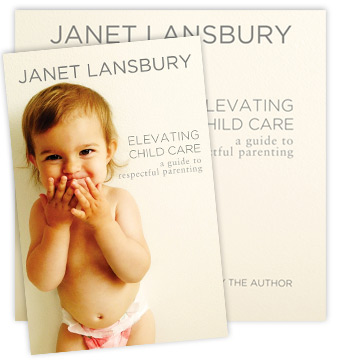
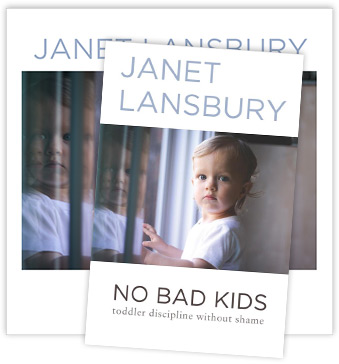
For more about children and social learning, please check out my books:
Elevating Child Care: A Guide to Respectful Parenting and No Bad Kids: Toddler Discipline Without Shame.
I’ve also recorded a podcast on this topic: Helping Your Child Say “I’m Sorry”
(Photo by Bridget Colla on Flickr)





Wonderful article Janet, and I am a steadfast believer that a child, of any age, must understand his or her transgressions before he or she can take responsibility for them. Many years ago when my son was about twelve or so, four of us were walking back to my house after having pizza. Along with he and I, was my girlfriend and her four year old girl. I put my son in charge of caring for the little girl during the walk back. When the little girl made an abrupt gesture toward the street, I jumped in and grabbed her. My son wasn’t happy that I took over, but I explained to him that the little girl depended on him to keep her safe, and his hesitation risked her safety. After some dialogue he understood, and I don’t regret having put him in charge. Today at twenty-four, he is incredible with watching out for others, young or old. He has developed and continuing to develop his sense of awareness and foresight. All too often as you point out, we take for granted children should have our knowledge, but they don’t. It is up to us, the parents and other role models to “teach” not just expect.
If I thought I could make it happen, I would love to send a young mother to you for education. Perhaps sometime in future, but I think she would take away a fresh understanding of parenting. I think your opinions, style and delivery are exceptional, as I’m sure all your students agree.
Wishing you well and continued success,
Ed
I think this book is along similar lines:
http://www.amazon.com/gp/product/1585429368/ref=ox_sc_act_title_1?ie=UTF8&psc=1&smid=A2E7FIPX0IDAPY
I don’t have children yet, but there’s one on the way, so I’m doing quite a bit of parenting book research! Love these recommendations and examples of gentle parenting.
Thanks for this! If it’s two siblings in the same home, scene you can’t remove them from the home, is it best to separate to another room?
This is a really great article. Your advice about dealing with a child who hurts another sounds wonderfully sympathetic to all concerned. I received similar advice when my son was pushing kids around and it was extremely effective – he doesn’t do it at all now.
joanna and Ed, thank you both for your thoughtful comments! And Ed, thank you for sharing your lovely story…and for your wonderful support!
Hi Janet,
I know this is not a new article, so not sure if you’ll still respond on this, but if you have any advice for handling this situation with teachers at play school (when we’re not there) I’d really appreciate it. We completely buy into this approach (as well add alternatives to time out at home-we don’t do time out), but can also appreciate that handling 12 little kids (between 2 and 3 year olds) is challenging. However, their approach is force an apology and if the child refuses (our son), they must go info time out. None of which seems like a good plan (but they obviously feel they have “success” with other kids like this so no incentive to change anything and since I’m not there, I can’t intervene how I’d like to). Any advice on how I could address this with the teachers? My son is most definitely not aggressive and he very rarely pushes or hits, but accidents of course happen, especially with so many little kids in one room. Thanks so much, Claira
i love this.g
I squirm, too, upon witnessing a forced apology, Janet. Somehow that distorts the meaning of ‘apology’ to the child.
So many mitigating factors as to how to teach a child the concept of apology – with the child’s age being primary. What a parent models for a 3-yr-old is not best for a 6-year-old.
Barbara, I would love to hear more of your thoughts about modeling apologies in an age appropriate way.
since i work in a class setting i work on teaching empathy by comforting the injuried party and by having the child who did the hurting listen to us talk about how it felt and pointing out the tears and sad face, it seems to be working i do have an empathic little group in our room. i have had people come into the room who have attempted to force an “I’m sorry” but see do not see it serving any purpose when the child isn’t really sorry that it hurt the other child because they had “their” bike. i do model an “i am sorry” when it is an accidental incident.
Kimberly, great advice! I work in a group setting as well, and I explain to the children that when we hurt someone (accidental or not), it is our responsibility to try to make them feel better. So I encourage the child involved to ask the injured child, “What can I do to make you feel better?” Sometimes the injured child will request a hug, a soft touch, or may even just want to be left alone. We never force an apology, but often times the children will spontaneously offer up an “I’m sorry” as a genuine show of regret or an attempt to make the other child feel better.
I was thinking the same thing!
Lovely. Thanks!
I just found your website and I love it! I love your incredibly balanced approach and the reminders that our kids are people too, that that they have opinions need to be treated as such!
I have a question along these lines, and perhaps you’ve already covered it in another place (I’m sorry if you have!). What about thanking people for things? You know the prompt “what do you say?”. Is this kind of prompting OK? My wife and I are gracious and thankful people, so I’m not concerned about our ability to role model this kind of behaviour for our kids.
I’ve noticed that kids often WON’T say thank you, because they don’t think of it, and often need to be prompted. I was prompted *a lot* as a kid, and I think it made me stop and think about why I was saying “thank you”.
I’m curious of your opinion on this! Thanks!
I am not Janet but from my experience just modeling or sharing the thankfulness/gratefulness you feel is enough to teach them to do the same. When someone gives them a gift… “Wow Sarah, look at that beautiful hat grandma gave you! Thanks Grandma, that was so kind of you to get her a hat.” Or having them see you send a thank you card to someone and talking to them about how it makes people feel to receive a thank you card. My daughter would thank me for the meal I cooked or something random at 2-3yrs old and it always felt so wonderful knowing it was genuine (or at least a learned thing no one told her to do:).
Beautiful, Janet- thank you.
Thanks, Aunt Annie!
I use the Responsive Classroom model in my kindergarten classroom and something I use very effectively is called an Apology of Action.
Here’s how it works in a nutshell. Saying “I’m sorry” is just the start. It really isn’t enough. You have to DO something to SHOW you are sorry. Say something mean – do something nice – draw a picture, offer to play a game, etc. Break my Legos – help me fix them. You get the idea. The apology STARTS with saying “I’m sorry” but ends with the offender fixing it. 🙂
I am curious what happens if the child isn’t sorry. Normally, I don’t push apologies but one day I was caught out and felt embarrassed so I pushed. My 4 year old looked at me bewildered and said, “But I am NOT sorry.” She wasn’t. She had not developed empathy to show the “proper” response in that situation. I thought she had a valid point.
Karen, I’d like to know more about what happened. Do you think it was really a lack of empathy or just a different perception of the situation?
Thank you for this fantastic post and strategies on how to help our babes (mine at least) reach an understanding of an apology that is indeed honest and authentic and not forced. Appreciate the tools to help on this journey…..to enable my babes to be the best they can be with the strategies on board 🙂
Loved this post. I agree 100%. I was wondering what your advice would be on how to react if it is your child the other parent is forcing their child to apologize to. (i.e. the victim of a shove or toddler hit).
Hi Emily! I’d take your cues from your child’s reaction, which might mean comforting your child or just acknowledging the situation… Then, during the “apology”, I’d just stay quiet and allow your child to absorb the situation. Maybe reflect about it later when you are alone together. Children sense falseness a mile away, so I wouldn’t worry about your child being influenced by that.
Thank you!
Am I the only one that strongly disagrees? Admittedly, my child is still too young for apologies (13 mos old), but he has been deliberately hit (with a glass bottle on his head!) by an older child who was not forced to apologize by his parents and I was absolutely horrified! I’m sorry, but children are children – it is our responsibility to teach them, not to simply “model” behavior and hope they discover things for themselves (as important as being a good role model is!) As an attachment parent myself, I understand wanting a gentle approach to parenting, but I honestly think this is a step too far. I certainly don’t want undisciplined children with no manners playing with (and hitting) my child with no consequences whatsoever. It frightens me that this is the new trend in parenting.
Vanessa, that sounds horrible… and unusual. There are obviously some serious issues going on there. Would a forced, insincere apology have made you or your child feel better?
“it is our responsibility to teach them, not to simply “model” behavior and hope they discover things for themselves (as important as being a good role model is!)”
We can certainly teach children to mimic our responses, but the only way we can teach true empathy, compassion and regret is through modeling…and trust in the innate goodness of our children. The child who hit your baby is not being respected and trusted, I can assure you. If you have other ideas about how to teach children these things, I’m totally open to hearing them!
What Vanessa is describing is not unusual.
Children hitting each other with glass bottles is unusual in my opinion. They should obviously not have access to those kinds of objects.
I agree. I’ve noticed a trend in the parenting in my community that really lets the children lead the way a little too much. Incidents like the one Vanessa mentioned are actually very common. Sometimes children just don’t feel empathy- but that doesn’t mean they don’t need to be encouraged and educated on how to respond after making a mistake (hurting another child or loosing their temper). I have been around several children whose parents just model and don’t give their children the words to use and some of these kids are very hard for anyone, including other children, to want to be around. A half hearted apology can be better than nothing.
Think about it Vanessa, when you ask a child to say sorry when they really aren’t sorry, you are asking them to lie. And when parents don’t accept the snarly sassy “SORRY” that gets tossed out and demand a “nice” sorry, they are teaching them to be really GOOD at lying – to lie convincingly! In this situation forcing a “sorry” is all about teaching a child social mores, not empathy.
While I do think it is important to teach a child the folkways of your culture, I don’t think that doing it at the expense of their honesty is the way to go about it. I don’t know if this is proper RIE methodology, but what I prefer to do is to teach the proper response without requiring it. I let my child know that now would be an appropriate time to say sorry, but I let them choose to say it or not. And like Janet said, especially if they don’t do it, I will apologize myself sincerely.
I agree with you that I too wouldn’t want undisciplined children with no manners playing with and hitting my children. But it sounds like you are equating lack of self-discipline and violence in the child with non-punitive parenting. That is just not the case. Many parents punish and force their children to do things because of the parent’s own fear. They are afraid if they don’t punish harshly or force the appropriate behavior, their children are going to turn out, as you said, undisciplined and violent, and may not develop into “good people”. There is always a lot of fear when it comes to “doing nothing”. People tend to believe that if you are DOING something, even if it ends up being the complete wrong thing, at least that’s better than doing nothing. But it’s just not true. Children have so much potential for developing into wonderful people all on their own, but it requires faith on our part to allow that to happen and not to mess it up with our own insecurities.
It is a very analogous situation, IMHO to the state of medicalized birth in our culture. Doctors feel pressured to insert themselves into a natural process because on the off chance that something went wrong and they didn’t “do something” they can get sued. One unneccesary intervention leads to another in a spiral of interventions and that is how we end up with a national c-section rate of 32.8%. In much the same way, a child whose developmental journey is constantly interfered with becomes less well equipped to continue that journey independently. It becomes a whirling vortex of parental insecurity, trained helplessness, and resentment on both parts.
So in this, and in so many other aspects of your child’s life, I hope you try to get past your own worries and trust them. And 13mo. is not too young for apologies. 1yos who speak can and do learn to say sorry, not through prompting (which they rebel against at that age) but by role modeling. And 1yos who don’t speak often show empathy and compassion by patting an arm, giving a hug, or other means. They are SO capable if we expect it, encourage it, and allow it but don’t force it!
I was with you until this became a war on OBGYNs. You really think the thing they care most about is being sued? That’s what they studied 12-16 years and work some 120 hour weeks for? I’m pretty sure they care about not having a dead baby. Even if the risk is tiny, try to imagine having to tell a mother you’re sorry, but their baby died. Then having to live with the thought every day for the rest of your life that maybe you could have done something different in hindsight. Try to empathize with that. It is true that the c-section rate is too high, but your conclusion is heartless!
Totally agree
As an oldster, I have gotten to the opinion that if they can express their opinion to me, it will also work in reverse.
Why should I be a doormat to your child if I see no effort on the parents part to teach?
You are totally right that kids need to learn and develop empathy. My kids all have great empathy but i find other kids are often aggressive, often not properly supervised and have poor levels of empathy. The perpetrator is often not bad, just lacking in understanding of their impact on others. I think i went so far in building empathy and sensitivity in my children that now they dont understand when others dont behave the same. So I have started teaching my kids basic assertiveness. Saying things like
NO don’t hit me/ STOP don’t chase me I don’t like it. It’s been amazing to watch my 5 year old go from being terrified of the school bully to teaching her friends to stand up for themselves, and now they are good friends! And the child has learnt not to scare littler children.
Claire, that sounds wonderful! I believe in offering words to toddlers (like, “you can say “no, I’m using that’) and other tools (like, “you can move away”). It’s especially helpful to give them this support during the exchange with the other child, or right after.
I’m not sure that empathy is the right term here. Empathy is about being able to identify with others’ feelings and having compassion for them – like a child who sees a family on the news that lost their home in a fire and collects toys, food, or clothing to send to them. An apology is more about remorse than about empathy. You don’t have to be able to empathize in order to apologize – my husband has apologized dozens of times for hurting my feelings (he was genuinely sorry I was hurt!) without having a clue why they were hurt. My husband sees the world differently. He will never truly understand and empathize with many of my feelings or reactions to things in life, but that doesn’t prevent him from being capable of apology. (although, yes, to a certain degree, he has to be capable of understanding what it is to have hurt feelings, so that is empathy, in part..)
With children, I do think it is a bit different, though. I don’t believe that children are inherently good. If people were inherently good, there would be no evil in the world. Children, like all people, have both good and bad traits, desires, thoughts, impulses. Our job as parents is to encourage the good and teach them to refrain from the bad. There has to be both positive reinforcement AND correction of negative behavior in order for children to grow up to be productive adults capable of self-discipline.
Children need boundaries. They need to understand that certain behaviors will result in corrective discipline and that there are ways to act in society that are right (being polite, saying please, thank you, I’m sorry) and that are wrong (throwing temper tantrums, lashing out, biting, hitting, etc.). A child is not on a path of self-discovery that ends up in flowers, and rainbows, and happiness, and good behavior. These things don’t just happen naturally by themselves. I most definitely advocate positive, gentle, nurturing, encouraging parenting – but never to the point of complete absence of some rules, boundaries, discipline, and correction.
And yes, a forced, insincere apology would have made me feel better, because it would have shown me that at least the parent was trying to teach their child proper ways to interact with others. What happened was “do you want to apologize?” “NO!!!!!” “ok, then. Well, next time we shouldn’t hit, ok?”. What exactly was learned from this exchange? That the child can do whatever he wants and there are no consequences..
I definitely don’t have all the answers – I am also just figuring things out as I go. It I feel like everywhere I turn, we are being told to give kids so much freedom in discovering everything for themselves and playing a role in their own development and discipline (by discussing and deciding “together” consequences for things, etc), that I feel it is completely undermining our role and responsibility as parents to raise and train our children. I think that if you don’t want to force your child to apologize, then at least take some form of action – a time-out, a toy taken away, a firm reprimand..
I think that eventually, children will learn how to be appreciative and remorseful. Until then, they should practice saying thank you and I’m sorry…!
You are so right!
Vanessa, I agree wholeheartedly about children needing boundaries (and have written many posts about that, like this one: https://www.janetlansbury.com/2010/04/no-bad-kids-toddler-discipline-without-shame-9-guidelines/ ). The boy in the situation you describe is clearly lacking boundaries, feels an uncomfortable, scary amount of power with his mother and is practically begging for help from her by acting violently. Whether he says “sorry” or not is the least of his worries, in my opinion. This is a sad situation. (Why is he allowed to wander around with a glass bottle?!) You don’t say how old the boy is, so it’s difficult to gauge how much empathy he might be capable of…but I definitely don’t agree with the way the mother handled this. Assuming he was 2 to 4 years old, I would have apologized profusely to you and your daughter, expressed concern for her and done anything I could to help, told my child that it was definitely not okay for him to do that and probably taken him home. I’d feel extreme concern about my son’s behavior and seek guidance.
Empathy begins when children understand that others feel the things they feel. They learn to act with compassion, remorse, etc., when those feelings and responses are modeled for them. Your husband may not completely understand, or share your feelings about a particular situation, but he does understand that you are hurt or angry and he knows what hurt and angry feel like, so he feels sincere regret and apologizes. If he was just parroting empty words to you, I doubt it would make you feel better. Well, that wouldn’t make me feel better.
The key is understanding what our parenting goals are… If our hope is to raise children who are genuinely kind, well-mannered, sincere and authentic, I can 100% guarantee you that commanding a toddler to mimic words is not the way to do that. Neither are time-outs, punishments, physical or verbal abuse. One of the big problems with doing those things is that they erode the relationship of trust between the child and parent, which makes children feel less secure, less competent and therefore less inclined to act with compassion.
I guess that if we can’t view our children as inherently good, we aren’t ever going to be able to trust them to do what’s right. That is a shame, because without feeling trusted our children can’t gain true self-confidence. (I know that Attachment Parenting encompasses a variety of things and is widely interpretated, but not believing children inherently good is the last thing I would expect that philosophy to be about.) YES, children need us to prevent them from doing wrong things and be clear and consistent about our expectations. But without basic trust in them as people, they don’t have much chance of genuinely internalizing our values and getting beyond the parroting stage.
Vanessa, I totally agree with you. Yes I make my kids apologize but then we talk about it. It’s not a one and done. We keep talking about it so they understand. It’s asking do you like it when people do that to you? How does that make you feel? Etc, etc.
Vanessa, perhaps you can see in your husband what end comes from just forcing our children to parrot the right words, and not truly fostering empathy?
At any rate, I agree that children need boundaries and consequences, but they don’t need punishments generally. Parents need punishments in order to feel powerful and effective. Children need consequences. The natural consequence for hurting friends is probably as Janet said, “I can’t allow you to hurt other people. We have to go home now so that our friends can be safe while they play.” It’s not a punishment, we’re not asking them to lie to another child, but boundaries are definitely in place. Consequences are enacted with love. You can “train up a child” without being punitive. In fact, in animal training, punishments have been found to be ineffective. Go into any dog obedience training center and you won’t find them advocating any kind of punishments. Crate training is a sort of natural consequence, and treat or praise based training is the standard for obedience. Certainly our children aren’t animals, but I hope that we would offer our children at least as much love and courtesy and faith in their ability to learn proper behavior as we offer our pets.
Thank you, thank you, thank you for this!! We need more people to tell parents that their choices are valid, even if it is not popular.
Excellent reply! You don’t apologize to learn empathy, you do it to make the other person feel better….
Vanessa you are totally right. Wrong term being used here.
This method won’t work on all children also and I think it all depends on the age of a child. There comes a point where a child should say sorry on their own.
Secondly saying sorry isn’t something we should say too often (as we should always be on our best behaviour) so to me it’s a hard thing to role model.
Empathy is like love – can’t teach it but you can certainly teach manners.
Vanessa, How does a time out or a toy being taken away demonstrate natural cause and effect? Im very confused. If a child is being violent when playing with others, they should not be allowed to play with others next time. In real life, even if no adults were present, that would be the result. Or am I wrong on this point? (I am new to RIE, so I don’t fully understand all the specifics yet.) I thought that by giving a natural solution we were teaching our children to be good…no matter if we are watching or not. Whereas another (not natural punishment) will only teach them to be better at not getting caught? Lastly, I think the lady at the park with her child may be doing the best she can, but is not a good representation of this method. No RIE parents I know would let such a horrible event go without at least the adult giving an apology.
Vanessa, if those parents just let their child walk off and did not speak to him, you’re right. Still, I don’t find a forced, muttered ‘sorry’ does much to make anyone feel better.
What’s important to understand is that Janet is not advocating letting your kids hurt others freely without doing something about it. Just that ‘you’d better say sorry or else’ isn’t really helping either.
You don’t say how old the kids were. I do daycare at home, and right now have several two year olds. Boy can they go at it. And I’m handling it so much differently now- not that I was ever harsh, but in these types of things I’m learning that teaching and observing can actually have a better outcome than ever. If one child hurts another, or grabs a toy, the first thing I do is empathize with the ‘victim’. Then I ask the other child to ‘look at her face. She’s sad’. You’d be surprised how often the other child immediately wants to make amends- and I can see how much more meaningful they are when given freely.
Sometimes the ‘perp’ is too angry to do this. So I focus on providing comfort. And as the other child calms down, i ask ‘are you ready to say sorry?’ Waiting until they are calm helps a lot- their apology is more sincere and the ‘victim’ can tell.
I have been caring for kids since my first was born in 1982. And I’ve tried it all (tho I never thought much of physical discipline ). Time outs, lost privileges, forced apologies. And the thing is, instead of feeling frustrated that the message isn’t getting across, I’m getting real joy out of watching their natural empathy unfold. Just posted about one such observation on my FB last week, because it was just so cool to watch. Even infants have some rudimentary empathy- it’s why when one cries, the others often follow. You just have to be there and guide them to let it out, at each developmental stage.
As a man, which I see there are not a lot that frequent this site, I agree with Vanessa – “I’m not sure that empathy is the right term here. Empathy is about being able to identify with others’ feelings and having compassion for them – like a child who sees a family on the news that lost their home in a fire and collects toys, food, or clothing to send to them. *An apology is more about remorse than about empathy.*”
You can easily “create” remorse simply by taking your child to a private area and spanking them (age dependent), explaining to them why an apology is necessary in these situations and that they must do so AND ask for forgiveness. Asking for forgiveness is a separate act. Apology = remorse; Asking forgiveness = empathy
Train up a child in the way he should go; even when he is old he will not depart from it.
Also, it frustrating that you are just posturing. You are simply stating your point of view as fact and hoping we’ll agree with you and swallow it whole. You offer no research, no field study of any kind to back up your assertions. When dealing with deep psychological arenas, like how adult empathy is developed in children, or how long it takes children to “absorb” a situation, you should offer up some professional references for your claims that would give us any reason to believe you.
I could just as easily say: Most children absorb situations much faster than their adult counterparts, because their brains are newer, so forcing them to apologize teaches them the best form of empathy.
See how that works? Just saying what I feel, no reason for anyone to believe anything I say.
Again, Vanessa really hits the nail on the head with most of her post, so I won’t repeat the whole thing. But children really aren’t inherently good. Bad behavior MUST be corrected. The only thing Vanessa left out was the spanking.
Thank you, Scott, for also being a voice of reason in this forum. Remorse is totally different than empathy- and I love my children, which is why I both model apologizing AND having them say it. It should be the first reaction to injuring someone, not ignoring it.
And I spank my children when necessary. I’m not evil. Please do not paint me so. Parenting is hard enough without all the second guessing from *everyone.*
And I will pray for his children.
First, there is SO much research out there that discredits the value of both punishment and rewards (check out the book Punished by Rewards).
Second, sometimes the proof is in the pudding. Have you ever been to a preschool/daycare that is run totally the way Janet suggests? Once you experience this (as I did, as an intern), you will see everything with new eyes. The thing is, you’re not just seeing this one suggestion in action. You’re seeing an entirely different philosophy, and how all the pieces fit together, and the children truly amaze you. The kids with parents who are strict with them, you will begin to see, there is just no comparison, AT ALL.
I’ll share an anecdote, an experience I shared with a couple of 4 year olds, at this internship: I was pushing a child around in a circle in a cart on a track, this particular child loved this so much, and was having a lot of strong emotions and difficulty because his parents were in the middle of a divorce (his first impulse in many situations was to be disagreeable, he liked to say no a lot). When another child wanted a turn, I stopped and asked the first child if we could take turns with one lap for him, and then one lap for the other child. At first he insisted that he get 3 turns for every 1 turn for the other child. I didn’t shame him for this suggestion. I simply asked the other child if this was agreeable to him. He said no. I didn’t interfere or judge, but I moderated the discussion, and they went back and forth. It took probably 5 minutes, which felt like an eternity, but finally the original child said, “does it make you sad that you don’t get a turn?” and the other child said, “yes” with the saddest, pleading eyes. That was that, they made a fair agreement. The only thing I did was create space for them to hear each other’s feelings, gave a few prompts, and once or twice asked the second child to weigh in because he was a bit shyer/more subdued.
The fact is, the original child had a very strong impulse to stay in the cart. Of course he didn’t want to share! But when he had the time and space to really ponder the other child’s point of view (which, again, took a little while), he wasn’t selfish at all. You will so rarely see children given this kind of space. Instead, the adult is insisting “don’t be selfish” and all kinds of things that make the child feel ashamed of their impulse (which all of us feel sometimes, but have just learned social graces to not say aloud). When the child is essentially told by the adult, you’re bad, your ideas/impulses/feelings make you bad, this really affects the child in the opposite way of what you intend. This is one huge point of divergence between a more strict parent’s methods and the kind of parenting style that Janet espouses. It’s hard to really get at why the shaming method works against our goals, and not everyone believes it. The fact is, in order to see the no-shame method working, you really do have to see it consistently.
Later, these two children both agreed one lap was too short and they both wanted it to be 2 laps each before switching, which was hard for both of them, because it was a trade-off, a longer turn also meant a longer wait! It was a much shorter conversation, and they got to agreement quicker this time, but you can see the struggle! Waiting is just hard for them at this age sometimes, especially when they’re waiting for something they find so fun! That does not make them bad children. That makes them developmentally appropriate. It adds nothing positive to judge the children for being immature. They have to go through this stage before they get to adults, it’s just reality.
A strict disciplinarian parent who doesn’t give their child consistent messages of “I trust you’re a good person” (despite having to grow through a period in youth of not having fully developed their frontal lobe which is responsible for impulse control) can’t discredit the suggestion because they half-heartedly tried something that superficially looks like this method one time and their kid didn’t respond well (or they’ve misidentified an uninvolved/distracted/uncaring parent as taking this approach, which they haven’t; kids need our presence, and they don’t behave well when we ignore them because we don’t care how they behave, so don’t mistake Janet’s suggestions for this kind of parenting).
It’s not just about the method, it’s about the entire belief system, the energy you present to your child. If your mode is always in negative, punitive, fixing mode, and you’re always in fear, I don’t even think you’ve got the right body language and facial expressions to pull it off. If you don’t believe in this method, how can you? That’s why I encourage anyone in doubt to go see it in action at a non-punitive daycare, which you can find under many names: RIE-inspired is one, but there are others, such as nonviolent communication, respectful caregiving, or a place that doesn’t use reward and punishment, or that rejects behaviorism. Or just, if you ever meet a parent who has a peaceful, trusting vibe, and you watch that parent interact with their kids, try to pick up on the subtleties of what they’re conveying to their kids, and teaching their kids, through all that gentleness (it’s not just their words, it’s not just their movements, it’s all of it: tone, facial expressions, body language, giving space, not rushing, so much is going on there!!!). There’s so much happening in the subtleties that come only with a different parenting philosophy. Once you see it, though, you can’t unsee it. You really do need to learn to, as Magda Gerber said of babies, see children with new eyes.
If it helps, you may want to just talk to a child development professor at a local college or university. There is no research to back up harsh punitive styles, so anyone who IS in an academic setting can confirm for you that the science is behind an approach that embraces the same spirit as Janet’s approach (though everyone has subtle differences in their implementation and style).
I’m interested as to why your gender makes a difference in your response to this issue, Scott? (And the relevance as to the predominant gender of the respondents?)
And have you been informed (I assume you have kids?) as to how your children behave towards others when you are not there to enforce their remorse? When I see kids whose parents control all of their social interactions away from their parent/s I find they are either entirely too fearful to take part in any meaningful social contact, or more commonly, that once they have the freedom to act as they please they like to lord it over other kids (the way they’ve evidently learned from their parents!)
I defy any parent who has anything to do with children on a daily basis to tell me modelling is ineffective in shaping the social development of a child.
Janet, since this post first came out I’ve had more thoughts about the subject. I think it’s really valuable to separate being sorry for the behaviour (which children may come to feel and express themselves if we are careful not to force the issue) and being sorry for the emotion which caused the behaviour (which I think is inappropriate- we must allow children to own and hold their feelings). It was just the other day that I wrote this post about it- you might be interested: http://auntannieschildcare.blogspot.com.au/2012/07/sorry-doesnt-fix-it-getting-to-bottom.html
I’m going to link this post of yours on my page- I think we’re singing the same song again! 😉
Thanks for yet another great read, Janet. Personally, I felt really proud of my 2 and a half year old son as I read it, remembering the un-prompted ‘I’m sorry’ I received recently. He had snapped an old plastic head-band of mine, and at the time, I explained that people feel upset/sad when we break things that belong to them. He hoped that ‘Daddy could fix it’ (as always!) but I said ‘probably not this time’. Hours later, he found the other half of the head-band and showed it to me, saying ‘I’m sorry about this, Mummy!’.
You’ve also made me realise that he has been ‘apologising’ in his own ways for a long time – patting someone where they’re hurt, grabbing paper towels for a spill, and giving toys/hugs to his baby sister/other kids.
He is a terrific kid but I would like to take some credit as my husband and I do our best to parent patiently and positively! 🙂
Sounds wonderful, Belinda!
I love and get a lot from your articles as well as facebook share them. However I was wondering how to teach empathy to my two moderately autistic 5 and 6 year olds as they benefit from direct instruction or direct modeling only on tangible subjects. I wont be able to model empathy and have them realize it as a valuable skillset to acquire. I know because I have been trying. Please let me know your ideas as I believe they are still young enough to benefit from a positive change in my approach.
Thank you, Missy! That is an excellent question and a little bit out of my realm of knowledge, but I’ll give it a shot. I totally agree that your children are young enough to benefit from any positive changes you might make. Could you tell me a little more about how you are approaching this now? I’m assuming that you and others apologize to your children… Maybe you could explore with them how that makes them feel. If they are unaffected by the apologies, you might explain the importance — saying “sorry” lets people know that you care about them, etc. Your children might need to learn this from the outside in, by saying it before they really mean it, but then afterwards you could discuss what they noticed about the other person and how they felt.
Hi. What a great article! I have really struggled with teaching my kids (with strong ASD traits, but not actually on the spectrum – a long story!!!) to make false apologies. I strongly disagree with doing this. I do agree that children must make repairs when they hurt or upset another child so that their actions show that they are thinking of the child and the impact of their own behavior. I also apologize to the other child – some kids really need it to move on.
Missy Kay – Explaining “ouch, that really hurt/upset ____ when you ____”, then relate it to an injury/injustice that you know they have experienced fairly recently can really help. These wee guys need something to pin others’ experiences to. That’s where empathy comes from – from a shared understanding. All young kids, and our kiddos with ASD/ASD traits at an older age, just don’t have empathy. They are egocentric, the world revolves around them. It’s a developmental thing for all young kids, and something that children with high functioning autism can often (not always!!!) learn to reason through logically with practice – it may never come naturally, but becomes a little checklist in their heads that they can refer to (eg 1. Where was I? Where was ___? Did we touch when ___ fell? 2. Are they crying/laughing? 3. If they are crying, have I asked if they are okay? 4. Do they want me to help or get help? 5. Have I told a mommy/daddy? 6. What can I do to make them happy again? 7. Have I done it? 8. Have I said sorry?). It’s an intellectual approach to empathy and takes a lot of facilitation. I also make sure the repairs are tangible eg no hugs (they always end up being too rough, too long, or just feeling overwhelming for a crying child), but an ice pack or cold flannel, helping rebuild the building how it was (not how they think it should be!!!), getting the truck back etc and always going and getting adult help. Remember – if your kids are on the spectrum, you NEED to give yourself a break; typical parenting just doesn’t work. It takes creativity, trial and error, and a lot of wine 😉
Check out Emotion Works as a great way to teach kids about their feelings and behaviour. It is mainly used in nurseries but parents could find it interesting. I think teaching kids about their emotions is the most important thing we can do!
Hi Missy!
Not sure how long ago your post was written, but I may have a few pointers for working with autistic children 🙂
My son (who has not been officially diagnosed), but who does show signs of having mild autism, has trouble empathizing with others and tends to act quite impulsively. What I began to do with my son (who is 6 now) was to explain empathy in the way I would any other technical skill set rather than an emotional one.
For example, my son used to grab/hit others quite often, so I began asking him what he was trying to do. The response was often that he wanted the other child to play with/look at him. So…I began to ask him questions such as, “If someone hit or grabbed you, would you want to get closer or move further away?” When he would answer “Get away”, I would let him know that it probably felt the same way for the other child and that he should try something else.
This DID make sense to him (where hoping he would naturally feel guilty did not, and he began to see that the approach he was taking simply did not work or get him what he wanted. I would then give him a few options to try, such as “It feels nice for me when someone invites me to play with nice words or a gentle touch…why don’t you try that and see if it works?”
The more my son would try new approaches, the more he began to see what did and what did not benefit him. At first, it was really distressing for me to see him behaving impulsively and in socially unacceptable ways, but there has been LOTS of progress (even if it has been slow). Explaining to my child how using manners/exercising compassion can benefit HIM and help him to reach his own goals has really made a difference.
Perhaps you could try something like this?
Interesting discussion… One thing I’ve been doing with my 11-month old is pointing out “that must have hurt” when he falls or otherwise hurts himself. I am hoping that by giving a word to the pain he’s experiencing, it will help him develop awareness and empathy when he hurts someone else and I or the victim tell him: “that hurt”.
Exactly! You are modeling empathy…which is by far the most powerful way to teach it to your children.
Thank you for this post! I’ve known for a long time what I *didn’t* want to do in these situations (force an apology) but haven’t known what *to* do. These are some great tools to have in my toolbox.
This is a wonderful post Janet. I had read it a while ago but today I had to read it again. I am just so glad that the incident happened with a friend of mine who has the same parenting ideas. I am so grateful for having found Magda Gerber and blogs like yours.
Jeronima, thank you so much for this lovely shout-out.
Janet, Just wanted to say that I REALLY appreciate the positivity, peacefulness, gentleness of your posts and your responses to comments on your website and I wanted to share this quote that reminds me of you and how your handle yourself with such grace when some responders are confrontational. Thanks for all your work!
“When people insult you, don’t take offense, but do listen to their words. They are telling you the exact negative qualities that they possess. “The Law of Mirrors” states that one can only see what’s in them, regardless if it is what is actually present in reality or not. Release the need to defend or try to explain to them that you’re not being whatever-nasty-insult-they’ve-thrown-at-you, but evaluate instead all of the insults, and realize that this is who they are. Then decide if a person with those qualities is one who you’d like in your life or not.” ~~ Doe Zantamata.
Thank you so much for the great compliment, Lora! Nothing could make me happier.
I dare say this is the best post I have ever read. It never felt right to me when I was forced to say I was sorry, and it never felt better to hear a reluctant person say it to me. This merely causes embarrassment and shame. Thank you so much for the enlightenment.
Hi Janet – thank you so much for this great post! I wonder if I might ask you a question from the opposite side. I do my best to follow exactly the path you describe, and try hard to maintain a space of calm, assertive CEO-hood with both of my children (clear limits set with empathy and held, although I readily admit exasperation can definitely creep in!). My older son (4) most of the time will spontaneously apologize or offer help when he accidentally hurts someone or something. When it is more intentional, however, and I say to him (and stop him physically if need be) “I won’t let you…” or “Ouch. Look at your sister’s face. That hurt her” or something along those lines he will often say something like “I won’t do that again.” I know he doesn’t mean these words, but has clearly picked them up as a “good” response. Do you have any advice for how to handle the empty responses when they happen? I’ve tried things like “Saying you are sorry/won’t do that again is a good start, and now you need to follow through with your actions.” I honestly have not felt, however, that this has been very effective. We do regular special time and roughousing with him as well, if that helps or provides more context. Thanks again for all you do!
Great ideas!
Spot on Janet! I can’t stand forced apologies. I think over my own childhood and find sometimes someone deserved to get pushed or hit (in my case due to being bullied). I wasn’t always sorry and if I’d been asked to apologize I wouldn’t.
Now that I’m an aunt and nanny I never make a child apologize for their actions. I do however explain why their actions are not appropriate and ask if the child understands what he or she did is wrong. Sometimes it is necessary to have the child think about the situation. Then we decide what would be a better solution.
(continuation of my comment…)
Sometimes you just aren’t sorry even when you know your actions were unkind.
I am new to RIE and have just been reading through to learn more as I begin to implement it with my 6 month old and almost 2 year old daughters.
My older daughter has picked up on saying “sorry” mostly from hearing us and others say it. However she doesn’t understand it. She says sorry to the door if she bumps into it or to herself when she gets hurt (sometimes even when she had nothing to do with it like when I tripped and bumped into her a bit). Sometimes she just says it and I don’t see any reason (no one and nothing got hurt, bumped, even touched).
When she apologizes correctly (maybe after being too rough with little sister) I try to encourage it. “Thank you for telling Sabrina you are sorry, that can help her feel better.”
I try to explain that she doesn’t have to apologize other times. “You did not hurt me when you walked past so you do not really need to say sorry.”
It just bothers me because she sounds so sad and so very sorry when she says “sorry” usually. I don’t want her to feel bad all the time. I would love to hear your thoughts on how to handle this situation. Do I just stop trying to explain it and hope that she will learn as she grows? I try to explain my apologies more so that hopefully it will help her learn as she sees it. For example instead of just saying “I am sorry” I try to say “Joey, I am sorry I startled you”.
Hi Janet,
Thanks for the wonderful article. I’ve been following you on facebook for about 12 months and I’ve learned such a lot that really works from your writing!
How do you go about removing your child from the play date if it’s at your house? I assume you wouldn’t ask the guest to leave. Also what if you are the guest but you’ve only just arrived?
If you’ve addressed tiredness and hunger and reassured your child of your unconditional love, and the play date becomes violent (in toddler terms) but you as the parent need the adult interaction as much as your child needs the play, what then? I don’t use “if you continue to behave this way then we will have to go home” because it robs me of my play date also. I would much rather deal with the issue than remove my child (aged 3 btw) from it.
Is it just a case of practising empathy and model concern for the injured party and model apologising?
Long ago I read that all animals have a “way out” of conflict. For humans, that’s saying sorry. I think it is fine to teach your child to say sorry as a means of taming a social situation, while at the same time teaching them about compassion and how they would feel if that happened to them, even if they aren’t genuinely sorry in the heat of the moment.
Hi Janet,
First, I have to say that I am discovering your blog and … I Love what I read! A good friend of mine talked to me about you and now I just regret that anyone has not translate your books in french yet (what a pity! Even if I can read english…)
I was wondering about this “sorry” situation because I am a mother of 2 years-old and I am a teacher (9/10 years old) and … for now I just force them… I feel this is not the good solution because It does not change anything!
So, thank you, merci!
I will try to do what you said… in french! LOL 😀
Many kisses, thanks for being such a nice person!
I’m new to your site and RIE and am just so unbelievably grateful for all the work that you have done and continue to do. It resonates so deeply with me as the new parent of an eight-month old. She’s bright and curious and capable and I’m so happy to have found a set of “rules” that help me honor her as the whole person I knew she was from day 1.
Would you mind elaborating or directing me to an explanation of “hi” and “bye” being loaded words? My daughter is obsessed with waving and often mimics a breathy high-pitched “hiiiiiii,” which I’ve encouraged because, well, it’s so darn cute and she seems so thrilled to be communicating and eliciting a response from us where we all say hi and wave to each other. Is this encouraging performative behavior?
Like many of your posts, this makes me think about my own tendencies – in this case to mindlessly say I’m sorry ALL the time. To anyone and everyone, even when it makes no sense. Almost like Sarah’s daughter saying “sorry” to the door! I need to work on understanding where that comes from and think about what I’m modeling.
I’ve had trouble with being taught saying sorry always fixes things, because I have Asperger’s Syndrome and get anxious and confused when sorry doesn’t work. I think I should have been taught what to do in a more complex situation. I was born in 1982, when there was very little known about Autism, so I guess they thought teaching kids with it black & white problem solving was the best.
I completely agree with what you’ve said in this article Janet. I wish my son’s preschool followed the same approach. Today, to my surprise, I learned that my son had hit another boy in the face. The situation was dealt with in the expected way – Explain that it’s not ok to hit, give examples of alternative actions he could have taken, and then force an apology and have a time out. The teacher reported this to me while I was holding my son and he immediately leaned in to her and said forcefully that the boy had been making gun actions with his hands (a no-no in our family and at school, but something we’d particularly been working on over the weekend). It seems that he’d taken it upon himself to discipline his friend (in a way that has not been modeled to him by us, but he has been at the receiving end of aggression from other preschoolers a couple of times).
My son knows that hitting is not acceptable (well, he does hit his younger sister but less and less as we incorporate your sibling relationship advice) so I’m concerned about the emotions that lead him to do it – he is still genuinely angry with the other boy for being “bad” and says they’re not friends any more (they were best friends). This isn’t the first time that he has claimed a friendship is over after a friend says or does something he deems inappropriate. His emotions are very strong and even when we try to support him in exploring them fully he does not seem to ever come to a point of feeling forgiveness. (Maybe we’re not doing it effectively)
Is this normal? I’m frequently reading about 3 year olds showing more empathy than we’ve observed so far. Do you have any tips on how we can help him develop more genuine empathy / ability to forgive? We do spend a lot of time talking through the perspectives of all involved but I’m not sure it’s having the desired result.
Or are we taking it all a bit too seriously and should we take a step back from the ups and downs of preschooler friendships?
I have struggled with this. My 7 year old son is not impulsive or prone to hurting other kids, but there have been a handful of occasions where he has accidentally hurt another child.
And he is mortified.
He removes himself from the situation (hides under furniture or moves away from the group) and shuts down emotionally or will cry.
And I am just at a loss on how to respond.
What I have done is speak to him, asking him to describe what happened.
He won’t apologize, and I do. As in I go to the child who was hurt and say that I am sorry they were hurt, my son did not mean to hurt them (and then I feel terrible as I don’t want to invalidate their pain/suffering, so why am I even saying he didn’t mean to hurt them?)
But I just have no idea what to do. Part of the confusion is that when he is hurt by a child in this specific group, he never gets an apology from a child or parent. So in a way I am expecting him to behave outside of the norm that he has grown up in.
But it is important to me that he does not hurt other children, and that when he does he acknowledges the mistake (or the need for different tools if it was not a mistake).
He definitely feels remorse, very deeply. he just can’t face the hurt child.
And I don’t know how to address the other child.
i think you are doing a fab job helping your son and role modelling for your son. could you do the same for the other kids? advocate for your son, say to him your sorry he got hurt and ask the other kid to say sorry? these issues are so hard. But you really seem to be doing amazing. don’t change how you do stuff because the other parents around you are being thoughtless.
Janet! Thank you, yet again. You are the person that opened my eyes to rie parenting and I’ve never looked back. I love the trust me and my boy have for each other is priceless! This article is soooooooo good… I feel so strongly about it because I was forced to apologise as a kid, and it taught me nothing.. Everything I have learned about empathy, I learned through people who showed me love and grace, forgiveness and compassion. Interesting that the people who taught me the most in life, were the ones who modelled.. Who lived what they believed.
I find it sad the way Scott word proverbs 22:6 in such a negative light, so I’m going to undo that:Train up a child in the way he should go; even when he is old he will not depart from it. – this verse is not about punishment, shaming, forcing etc. The ultimate example in the Bible is my Jesus. He was the perfect example, and he changed lives through his actions, not by forcing people to change, or do! He lovingly guided, showed grace, went out of his way to make people feel accepted!
My mum, bless her, spanked me, yelled at me, punished me. Told me what to say, when to say it. I was polite, well behaved and a shining example of a respectful child in the eyes of others. But inside I was resentful, angry, unheard, misunderstood.. I have a very broken relationship with my mum, I love her, but I will never understand her, and we are not close. I do not trust her, she does not trust me.
I do not want that for my child. What is the point of having a child that behaves so beautifully that everyone thinks you’re a great parent, when it severs your relationship with the most important people in your life.
I think largely, the reason people struggle with the concept of accepting children’s feelings and trusting them, is because it looks messy to others. It is messy. It means letting go of looking like the perfect parent. And sadly, it’s all too often that people care about what others think too much!
Trust trust trust. I love it. Thank you Janet x
This is so true and I will apply this to my grandchildren. Its almost the same as when people tell their children when they did something wron “wait till dad gets home” and then dad has to do the hiding. So wrong for me because children forget and forgive instantly and doesn not need to be punished hours after the incident. I also dont believe in punishing your child or giving them a hiding when you are mad.There should not be anger behing a hiding or punishment but understanding and treating it the right way when you think straight.
Wow, what a range of replies, would love to read all before commenting… But well, I just want a chance to put in my two cents worth!
I worked as a teacher for 5 years in secondary schooling (12 – 15 yr olds) and 4 years as a Chaplain in primary context with 5 – 12 yr olds and now am a parent to a 3 yr old. I have enforced and witnessed many ‘demanded’ apologies. Some of those work where you see genuine remorse. Sometimes that involves empathy that you can discern too.
I can definitively say it is more often I have seen begrudgingly offered apologies with not an ounce of conviction that the behaviour of the perpetrator will change. This happens time and time again in cases of bullying discipline. A child expected to say sorry does not bring a change in behaviour, it brings shame on the one apologising which often requires action to re- establish their position of power with more bullying or retribution.
I’ve also seen some very good performances of ‘heartfelt apologies’ that satisfy the educator involved and then the smirking success of the child on their dismissal from the point of discipline knowing they have paid their dues and can continue as before. The victim questions whether it is worth the effort and disappointment to report the bullying the next time, emotions building up inside that no one is able to protect them or to make the bullying stop. Of course, I have no way of establishing the mode in which the bully learnt to care about the emotional needs of others.
I believe that when insisting on a child apologising, there has to be a serious attempt to have them recognise that their action had a negative impact on someone else and that is a sad, bad or concerning thing. ‘Sorry’ without that emotional connection be it remorse or empathy is fruitless.
As caregivers, we need to guide and teach how to manage feelings, emotions and a plethora of other factors, always with love… Power without love will give bitter results.
https://en.m.wikipedia.org/wiki/Remorse#Studies_on_apologizing
While only a wiki, it does highlight some interesting studies.
Another interesting reference http://www.emotionalcompetency.com/apology.htm
Emotional literacy is extremely important and poorly taught in my experience.
This is part of the reason why so many kids are running the households these days. Nobody taught manners anymore. It’s not so much about forced apologies as setting appropriate boundaries when kids are doing something harmful or inappropriate. Ok, so don’t force an apology, but how do you respond? When a child is too young to understand more insight oriented concepts, behavior modification and boundaries are important. They act out more without them. You can’t let them always lead and hopefully figure it out on their own. By then you’ve missed so many teachable moments. If I apologize for my son, great. If he apologizes and shows empathy, great. But does he get to continue with what he wants to do if he hurt someone purposefully to get there…nope. Seeing checked out parents all over the place. Then they wonder why they are seeing me for counseling later down the road. Follow through and boundaries parents.
Nobody is advocating letting children lead, only on better ways to guide them. I use these methods with very young children, with far better results than when I saw it as a ‘boundary’ to be set.
And checked-out parents won’t be reading these articles I’m afraid.
Thanks for the great perspective on this topic! It makes so much sense to not have a child give an unauthentic apology! I am fairly new to RIE and to your podcasts and articles. Just wondering if you can expand on what you say here about “hi” “bye” “thank you” and “share” I can apply the basic principle here but I would love it if you could say more about your point there. I like many parents I am sure am having a hard time breaking the “say thank you” habit and feel uncomfortable in situations with family and other parents . Thank you for your support system for parents though I am new to RIE much of it is resonating very deeply with me and I appreciate the supportive community you have created.
Great article. Noted for changing my own behavior.
Regards
Thank you Janet! I am always learning and am so appreciate to have found your blog and Magda Gerber before my daughter was born. Now that she is a toddler, we are definitely in the throws of this stage where some parents/teachers expect to hear “I’m sorry.” It got me thinking: do you have any advice about encouraging behavior that says “please” and “thank you”? I don’t want to be directing my daughter down a path that is too controlling. I did a quick search on your site without luck on this topic. Thank you!
Thanks for your kind words, Kara! Yes, I do have a post about “please” and “thank you” and I hope it’s helpful. Right here: https://www.janetlansbury.com/2009/11/hi-bye-and-thank-you-babies-and-manners/
Great article, thank you. Can I ask what do you suggest if the toddler doesn’t apologize?
I think that children from the time they can talk should be told to say sorry, please and thank you. I think they should be told to share and to speak when spoken. By the time the child is 4 or 5 they don’t have to be reminded to be polite. I agree that it is always good to model good behavior, But how will they know unless they are told.
Thank you for this wonderful Article!
But I need some advice on what to do when a child starts hitting parents? My son is 3+ year old, recently he has started hitting me and my husband for a ‘NO’. We have tried explaining him softly that this is not good, I have resorted to being angry, not talking to him if he does so and even spoke to his teacher to make him understand. Fortunately, the teacher says he never does this in school and never hit any of his classmates but this has become a usual thing at home. How do I deal with this?
I’m struggling a bit with this one. I have followed the advice to have me model the apologies, but my now 6 year old son never seemed to follow suit. Now he is in a Kindergarten situation with the teacher requiring instant apologies for everything, and I can see he’s a bit bewildered about what to do. I’ve noticed him now saying a quick “Sorry” after whatever he accidentally does, and continues on with whatever story he’s telling or game he’s playing, without actually checking in to make sure the hurt person is ok. How do you recommend we find this balance when these polite words are being required of them at school?
I had this situation with my preschools and i found that the only real and effective strategy that worked really well was if a child accidentally hurt another child i would would bring the two children together and ask the hurt child how they felt after being hit by the other child. The responses were things like ‘ it made me cry… etc.
i would then say to the child who had done this
‘ i know it was an accident, because ive seen how nice you can treat your friends, but how would you feel if this had happened to you’ ? have a look at their face do they look happy to you?
Their response was ‘ no they dont’.
I would then say .’ When we hurt our friends , it really does upset them and maybe they wont want to play with you if this keeps happening.
High supervision while children are playing is also needed and notice what is happening during play that can trigger these responses. I fully agree that getting them to say sorry is hollow and meaningless to you g children as they havent yet acquired empathy. Modelling good behaviour is also paramount here and treating chn with respect at all times while meeting their needs will also alleviate these behaviours.
This is really valuable advice for those of us trying to work out how to do the right thing with our children. Thank you!
I really enjoyed this article! I remember when I had apologized to a teacher for the 587th time, and not repented, my Dad saying to me: “An apology doesn’t undo the bad thing you did. If I robbed a bank, and told the police I was sorry, they’d just put the handcuffs on me and say “BE SORRY IN JAIL!”